What Is Synastry? How to Read the Astrology of Your Relationships
One of the most pervasive myths in astrology is that the secret to relationship compatibility lies solely in Sun sign matches. How often have you heard, "Aries...
One of the most pervasive myths in astrology is that the secret to relationship compatibility lies solely in Sun sign matches. How often have you heard, "Aries and Taurus just don’t mix," or "Aquarius and Pisces are a disaster waiting to happen"? I've heard this from hundreds of clients, but it's a misguided simplification. Real synastry astrology—what we often refer to as the synastry chart—delves far deeper than Sun sign compatibility. It considers the complex interplay between two individuals' entire natal charts, revealing dynamics that Sun signs alone could never illuminate. It's time to set aside these simplistic views and embrace the rich tapestry of insights a synastry chart offers.
Understanding Synastry: Beyond Sun Signs
When people talk about astrology and relationships, they often focus on Sun sign compatibility. This reductionist view overlooks the intricate web of planetary interactions and house overlays that truly define how two people connect. In my practice, I've seen countless relationships thrive despite seemingly incompatible Sun signs, thanks to harmonious aspects elsewhere in their charts. Sun signs are merely the tip of the astrological iceberg; they offer just a glimpse into the vast ocean of synastry astrology.
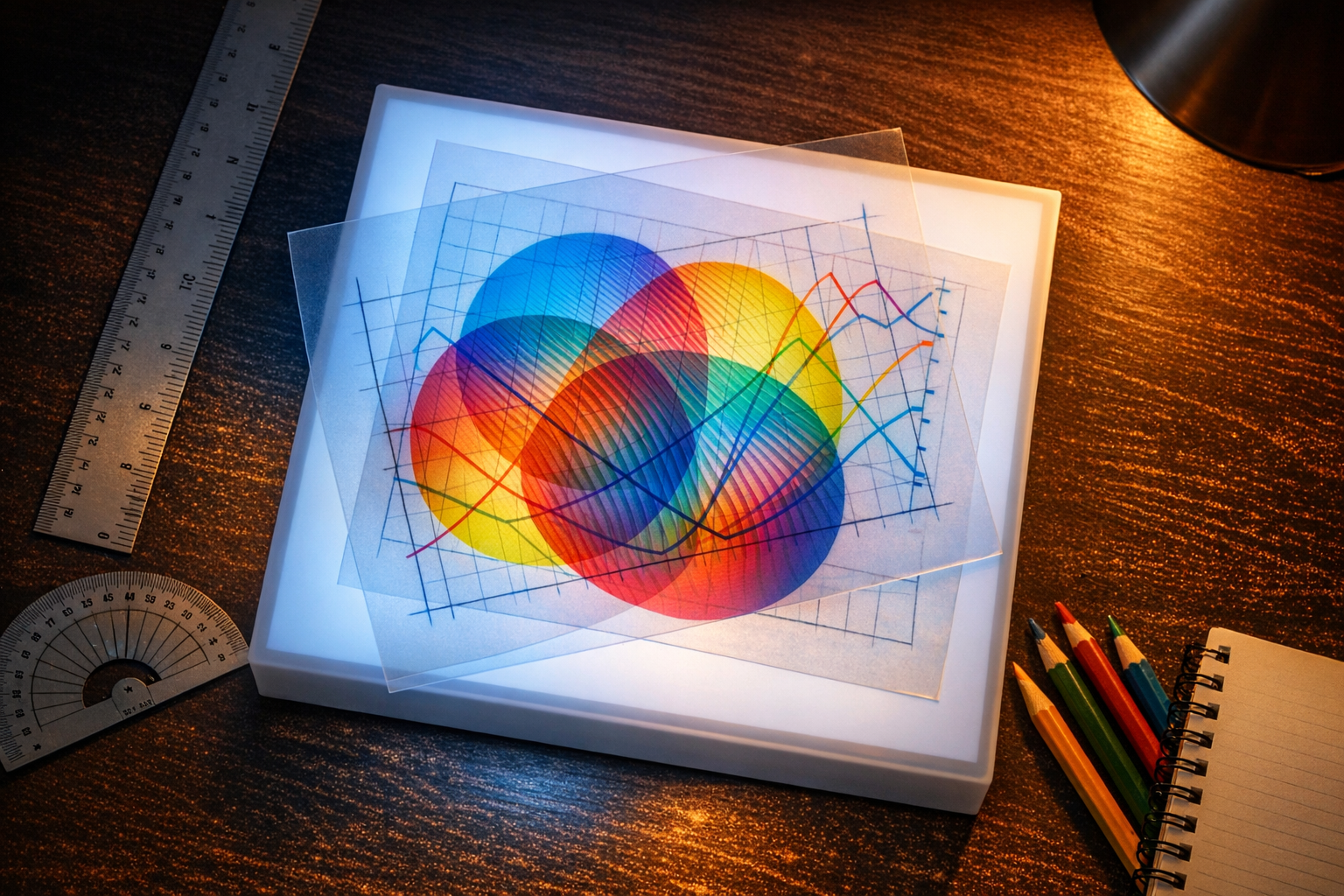
At its core, synastry involves overlaying two individuals' natal charts to examine how their planets and houses interact. This overlay is not about creating a single new chart; rather, it’s about understanding how each person’s energy affects and influences the other. Key aspects like conjunctions, trines, and squares between natal planets can reveal areas of harmony or friction, lending insight into potential challenges or strengths within the relationship.
The biggest misconception is treating a relationship chart as a prediction tool for success or failure. In truth, synastry is about awareness and understanding. Whether it’s Venus at 15° Leo conjunct Mars at 16° Leo igniting passion, or Saturn at 22° Capricorn squaring the Moon at 23° Aries introducing emotional lessons, these interactions provide a roadmap for navigating relational dynamics with greater clarity and empathy.
Key Aspects in Synastry: What Really Matters
Some of the most illuminating aspects in synastry involve personal planets like the Sun, Moon, Venus, and Mars. A strong Sun-Moon connection, for example, often indicates emotional synchronization. If your Moon at 12° Cancer is trine your partner's Sun at 14° Scorpio, you’re likely to find an emotional resonance that feels comforting and familiar. It’s this deep-seated mutual understanding that often forms the bedrock of enduring relationships.
Venus-Mars aspects can range from electrifying to volatile. A Venus square Mars aspect might bring intense attraction but also potential conflicts around desires and values. I've seen couples with Venus opposite Mars thrive on passionate exchanges but often need to manage their differing approaches to love and passion consciously. Understanding these dynamics can transform what might be perceived as friction into a dance of complementary energies.
Saturn’s influence in synastry should not be overlooked. While some dread its reputation as a harbinger of challenges, Saturn contacts—especially conjunctions or trines—can indicate long-term potential and commitment. A Saturn trine Venus aspect doesn't just promise longevity; it suggests a stabilizing influence where one partner feels supported in their values and expressions of love. Rather than fearing Saturn, embracing its lessons can lead to a relationship built on a solid foundation.
House Overlays: Where Relationships Play Out
House overlays in synastry illuminate where two individuals impact each other's lives most significantly. For instance, if your partner’s Sun falls in your 7th house of partnerships, there's often an immediate recognition of them as someone significant in your life narrative—a partner in every sense. This placement suggests that your identities are intertwined in ways that promote mutual support and shared goals.
A client once shared how her partner's Moon landed in her 4th house, creating an immediate sense of comfort and homecoming whenever they were together. This alignment nurtures domesticity and emotional security but also requires honest communication about personal needs to avoid codependency. House overlays like these show us where relational energies are most active and impactful.
Conversely, if someone's planets fall into your 12th house, they might bring up hidden or unconscious themes in your life. While this can be challenging—often triggering feelings of vulnerability—it's also deeply transformative when approached with awareness and openness. A relationship that stimulates your unconscious may initially feel unsettling but can lead to profound personal growth if navigated wisely.
The Ethics of Chart Comparison
Here's what nobody tells you: comparing charts without consent treads into ethically murky waters. Synastry reveals intimate layers of another person's psyche—information that should be respected as confidential unless both parties agree to share this exploration willingly. I've advised numerous clients to approach this practice with integrity and openness rather than using it as a tool for control or manipulation.
The real-world application of synastry should focus on fostering understanding rather than dictating outcomes. When both partners engage with their synastry chart with curiosity and respect for each other's autonomy, it becomes a collaborative journey toward deeper connection rather than a prescriptive guide.
The Role of Outer Planets in Synastry
Outer planets like Uranus, Neptune, and Pluto often bring transformative energy into synastry astrology that shouldn't be underestimated. I've seen Uranus, known for its unpredictability, inject excitement and change into relationships. For instance, a Uranus conjunction with Mercury can stimulate vibrant discussions and innovative thinking but may also spur sudden disagreements if not channeled constructively. These are the relationships that often keep you on your toes, compelling you to evolve and adapt.
Neptune's influence is all about dreams and illusions. A Neptune-Venus trine might initially feel like a fairytale romance with its idyllic charm. Yet, it can also blur boundaries, leading to idealized expectations that reality may not fulfill. In one particular case, a client mistook her partner's gentle Venus-Neptune contact for deep soulmate connection when it was actually a call to ground her expectations in reality. Awareness of Neptune's subtle energies allows partners to enjoy the romance without losing touch with the practical aspects of their relationship.
Pluto's presence in synastry charts usually signals deep transformation. I've witnessed Pluto-Moon aspects trigger intense emotional experiences that can lead to profound psychological growth. A strong Pluto presence can be both daunting and exhilarating, urging partners to confront their deepest fears and desires. Relationships touched by Pluto often undergo significant change but can emerge stronger and more resilient if both individuals are willing to engage in the process of transformation with honesty and courage.
Avoiding Overreliance on Synastry
One common misconception is treating synastry charts as the ultimate authority on relationship fate. While synastry astrology offers profound insights into relational dynamics, it's not a definitive verdict. I caution clients against relying solely on astrological compatibility as the litmus test for relationship viability. A harmonious synastry chart does not guarantee happiness, just as a challenging one does not doom a partnership to failure. Human complexities often transcend astrological predictions.
Another pitfall is obsessively seeking "perfect" synastry aspects as a measure of success. I've had clients delay meaningful connections while waiting for that elusive Jupiter-Venus trine or Moon-Venus conjunction. It's essential to remember that every aspect provides opportunities for growth and understanding—there's no such thing as a perfect relationship chart. Even the most harmonious aspects require conscious effort and communication to realize their potential fully.
Ethically, it's important to remember that synastry should never be used manipulatively to control or influence a partner's decisions or feelings. Informed consent is key; both parties should willingly engage in the exploration of their synastry chart for it to be meaningful and respectful.
Applying Synastry Insights in Real Life
To truly benefit from synastry astrology, approach the relationship chart as a guide rather than a rulebook. Use it as a tool to enhance communication and understanding between partners. Discussing challenging aspects together can illuminate hidden patterns and encourage personal growth. For instance, if Saturn squares your partner's Sun, initiate conversations about responsibility and individual goals to turn potential conflicts into constructive dialogue.
Make space for ongoing learning and reflection within your partnership. As planetary transits influence your synastry chart over time, revisit your charts periodically to explore new dynamics emerging in your relationship. A client found revisiting her synastry chart during significant life transitions helpful for maintaining alignment with her partner's evolving priorities and emotional landscape.
Finally, apply what you've learned from synastry charts to foster deeper empathy. Recognize that everyone brings their own unique energetic blueprint into a relationship. Embrace these differences as opportunities for richer interaction rather than sources of discord. This mindset encourages mutual respect and nurtures a supportive environment where both individuals can thrive.
Understanding how to read synastry can transform your approach to relationships from mere compatibility checks to deep explorations of connection and growth. If you're curious about how your planets interact with those of someone special, Shymea’s Synergy feature provides detailed insights into actual planetary contacts between two charts. Uncover the dynamics at play and enrich your relational journey with informed awareness.
Compare your chart with someone else's using Shymea's Synergy.
Try Shymea Free