What Is a Birth Chart? The Complete Beginner's Guide to Reading Your Natal Chart
You're staring at your birth chart, a circle filled with strange symbols and lines, and you think, "What is this telling me about my life?" If you're like most...
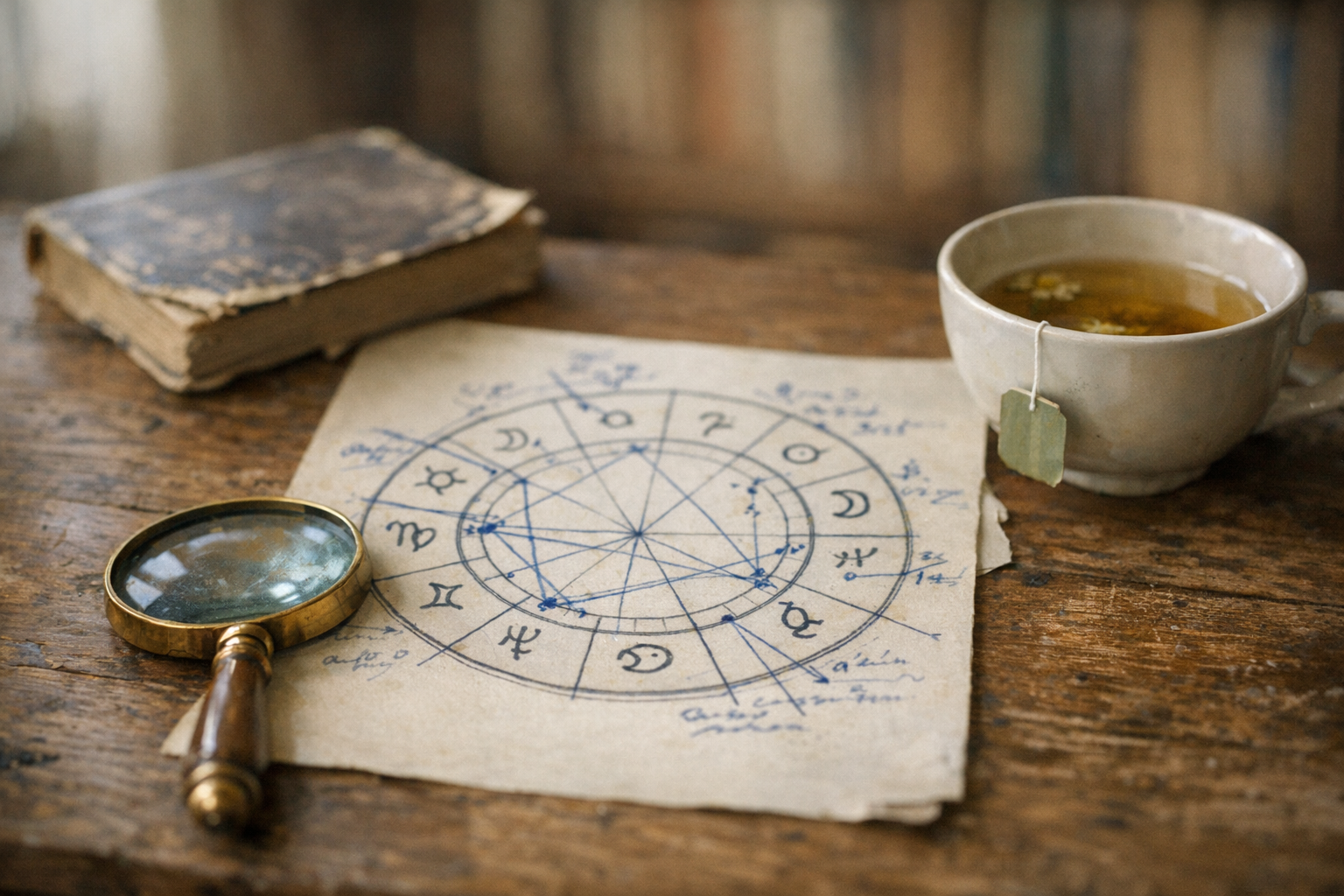
You're staring at your birth chart, a circle filled with strange symbols and lines, and you think, "What is this telling me about my life?" If you're like most beginners, you know your Sun sign—perhaps you're a Leo or a Taurus. But the truth is, your zodiac sign is just one piece of an elaborate cosmic puzzle. A birth chart, also known as a natal chart, is a snapshot of the sky at the exact moment and location of your birth. It maps out the positions of the planets, each occupying a specific zodiac sign and house, all connected through aspects. Each component tells a unique story about your personality, challenges, and potential. Let's decode this celestial blueprint to understand how it all works together.
The Misunderstanding: Beyond Your Sun Sign
Most people think astrology begins and ends with their Sun sign. In reality, your Sun is just one of many players in your birth chart. Imagine thinking you know everything about Shakespeare after reading only "Romeo and Juliet"—you're missing out on so much more. In my practice, I've seen countless clients initially perplexed by their complex charts. They quickly learn that their Moon sign reveals emotional needs while their Rising sign (or Ascendant) colors how they present themselves to the world. These additional layers provide depth and dimension to their understanding.
Every planet in your chart serves a purpose. The Moon reflects your inner emotional world, while Mercury indicates communication style. Venus whispers about love and pleasure preferences. Mars shows where you assert yourself. When a client discovers their Mars in Capricorn in the 5th house, they often experience a revelation: ambition meets creative expression here. Suddenly, their career-focused drive makes sense in contexts of art or romance.
If you're unsure where to start with your own chart, find your Moon sign first. The Moon changes signs roughly every two and a half days, providing nuanced insight into your subconscious needs and habits. Notice what sign it's in—perhaps Cancer, which suggests a need for security and nurturing environments. Do you seek comfort at home? Understanding this can be enlightening.
The Importance of Birth Time: Ascendant and Beyond
The time of birth is crucial in astrology because it determines the Ascendant or Rising sign, which changes approximately every two hours. This is why knowing your precise birth time is so important; it sets the stage for your entire chart's layout. The Ascendant starts the first house of your chart, governing self-image and outward behavior. For example, having Gemini Rising might mean people perceive you as curious and communicative, regardless of whether you're more introverted inside.
A few years back, I had a client who couldn't understand why her Taurus Sun didn't resonate until we zeroed in on her Sagittarius Ascendant at 15°. Suddenly, her adventurous spirit made sense—her identity was filtered through a lens of exploration and open-mindedness. This revelation helped her align her career more closely with her true nature.
Try this: look at your chart's Ascendant now. What sign is it in? This is how people likely perceive you upon first meeting. It's fascinating to see how our inner selves can differ from outward impressions. Knowing this can offer strategies for presenting yourself more authentically to others.
Planets: The What of Your Chart
Each planet in astrology represents different facets of human experience—what each part of you wants or needs. The Sun symbolizes our core self, while Mercury governs communication and thought processes. Venus speaks to love and beauty, whereas Mars deals with motivation and aggression. A chart with Venus at 22° Scorpio in the 8th house might indicate intense passion in relationships accompanied by transformative experiences.
I once worked with someone whose natal Mercury was retrograde in Pisces at 12° in the 7th house of partnerships. She often felt misunderstood in relationships but discovered that her reflective communication style was a natural part of her expression. Embracing this allowed her to develop deeper connections by being patient with herself.
Next time you're pondering your chart, consider where Mars is located. Is it nestled in Aries in the 10th house? This could mean career-driven energy characterized by directness and leadership qualities. Understanding what each planet represents can bring clarity to various life areas.
Signs: The How of Your Chart
While planets tell us what part of life we're exploring, signs describe how those energies are expressed. Aries might bring assertiveness; Libra seeks balance and harmony; Capricorn favors structure and discipline. When you know what sign each planet occupies, you're better equipped to understand the nuances of its expression.
A client once shared how she struggled with expressing her emotions until she realized her Moon was in Aquarius at 17° in the 3rd house of communication. She learned to detach emotionally when sharing feelings but found that intellectual discussion helped bridge gaps with those she cared about.
Examine your own chart: where does your Venus lie? If it's in Virgo in the 4th house, for instance, love might be best expressed through acts of service within a home setting, favoring practical gestures over grand declarations.
This exploration into birth charts will continue next time as we delve into aspects and how they weave together your celestial map into a coherent narrative. Stay tuned to see how Shymea's Birth Chart feature can illuminate these dynamics with accuracy and ease.
Aspects: The Conversations Within Your Chart
Aspects in a birth chart reveal the dynamic conversations between planets, offering insights into your internal dialogue. These are the angles formed between planets, often categorized as conjunctions, squares, trines, sextiles, and oppositions. A client of mine had Mars square Saturn at 14° in her chart. Initially, she perceived this tension as a source of frustration, especially in achieving goals. However, upon deeper exploration, she realized this aspect granted her resilience and a disciplined approach to overcoming obstacles. This shifted her perception from viewing the square as a hindrance to recognizing it as a source of strength.
Another powerful example of aspects at play is the Grand Trine—a harmonious pattern formed when three planets are approximately 120 degrees apart. I once worked with a client who had a Grand Trine involving her Moon in Pisces, Venus in Cancer, and Jupiter in Scorpio. This configuration indicated a natural flow of emotional intelligence and nurturing ability. She found that relationships were a source of joy and personal growth, particularly when she leaned into her intuitive gifts. Identifying such patterns can clarify where ease naturally manifests in your life.
It's crucial to remember that while aspects like squares and oppositions often indicate challenges, they also drive personal growth and transformation. For instance, a Mercury opposite Uranus might cause erratic communication but can also inspire innovative thinking. A holistic view of your chart—understanding both the tension and harmony within aspects—can provide a more balanced perspective on your life's narrative.
Common Misconceptions About Aspects
One common misconception is that difficult aspects like squares or oppositions are inherently negative. Many people assume these aspects spell doom or lifelong struggle. However, in practice, I've observed that these aspects often serve as catalysts for growth. They push individuals to confront issues and develop resilience. A client with Sun square Pluto initially felt overwhelmed by the intensity of this aspect but learned that it was an invitation to embrace transformation and empowerment.
Another pitfall is assuming easy aspects like trines or sextiles mean everything will automatically be smooth sailing. While they provide support and opportunity, they can also lead to complacency if not actively engaged. A chart with numerous trines might indicate latent potential that's never fully realized without conscious effort. It's vital to recognize that each aspect offers both a gift and a challenge; understanding this duality can help you navigate life's complexities with wisdom.
Integrating Your Chart's Wisdom Into Daily Life
To truly benefit from your natal chart's insights, integrate its wisdom into your daily life by observing how your chart's dynamics play out in real-world scenarios. If you have Venus in Leo in the 7th house, for instance, you might notice you seek admiration in partnerships but also offer warmth and generosity in return. By being mindful of these patterns, you can cultivate healthier relationships that reflect your authentic self.
Practical application of your chart involves continuous self-reflection and adaptation. Track transits that activate key points or aspects in your chart to observe how they influence your current experiences. For example, if transiting Jupiter is conjunct your natal Moon, pay attention to opportunities for emotional expansion or new familial experiences that arise during this period.
Journaling can be a powerful tool for mapping these influences over time. Note significant events or feelings when planetary transits activate sensitive points within your chart. This practice not only enhances self-awareness but also helps identify recurring themes and lessons for personal growth.
If you're curious about the stories woven into your birth chart and how to harness their potential, Shymea's Birth Chart feature provides detailed interpretations tailored to your unique cosmic blueprint. Our comprehensive Reports delve into various areas of life, offering clarity and guidance on navigating your astrological landscape with intention.
Discover these dynamics in your own chart with Shymea's Birth Chart feature. Get a deep written analysis of your chart with Shymea's Reports.
Try Shymea Free