How to Use Astrology to Improve Your Relationship (Even If Your Partner Thinks It's Nonsense)
She sat across from me, birth chart spread out, her fingers nervously tracing the lines. "How can I make this work if he thinks astrology is just nonsense?"...
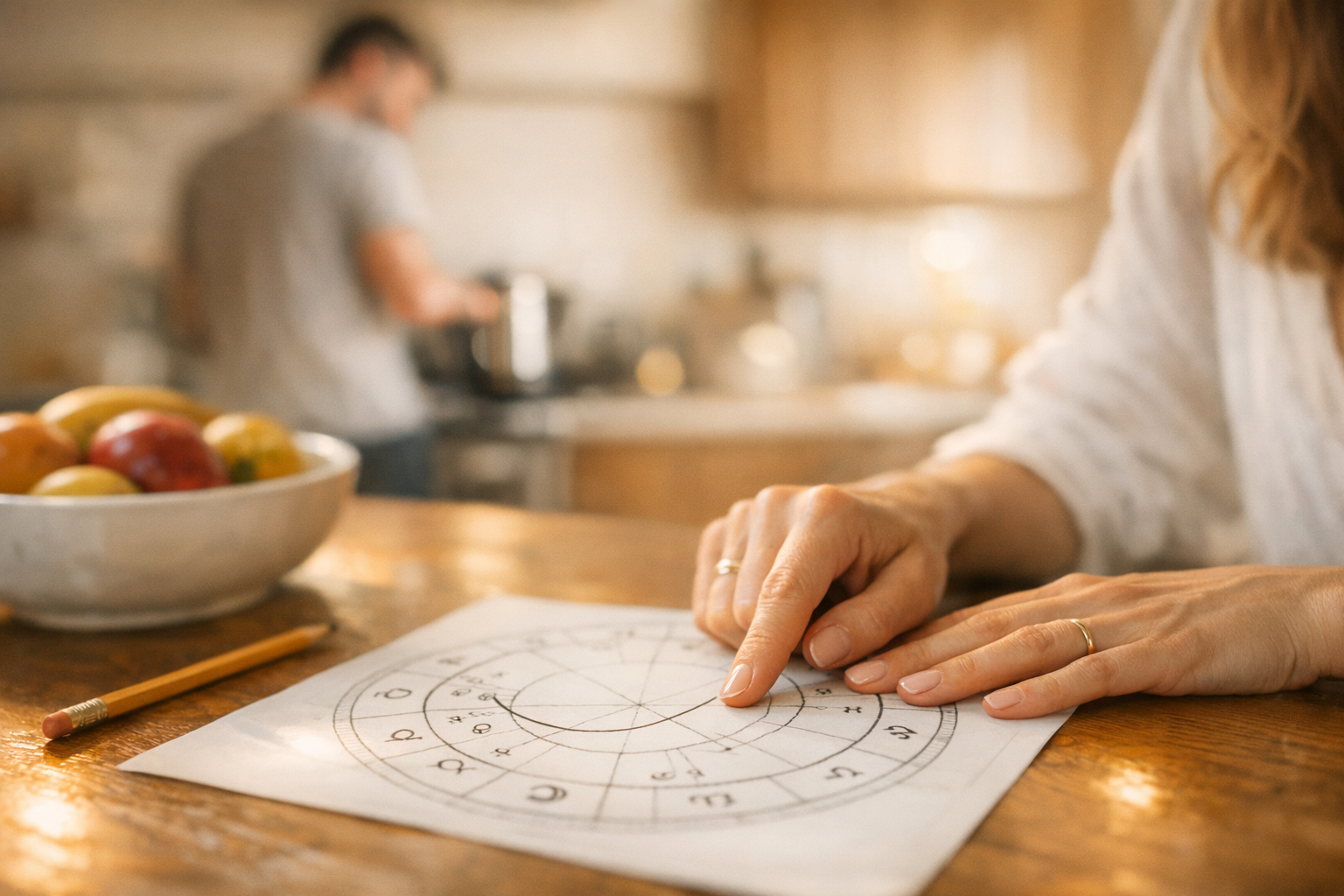
She sat across from me, birth chart spread out, her fingers nervously tracing the lines. "How can I make this work if he thinks astrology is just nonsense?" she asked, eyes filled with both hope and frustration. In my years of practice, I've met countless people seeking astrology relationship advice, trying to improve their relationships even when their partners scoff at the stars. It’s a common struggle, but I assured her: understanding the astrological dynamics can transform a relationship from the inside out—even if one partner remains skeptical. The key lies in leveraging your own insights to create a bridge of understanding and empathy.
Unraveling Misconceptions: Astrology Isn't Just About Sun Signs
The biggest misconception I encounter is the oversimplification of astrology to mere Sun signs. Clients often come in saying, "He's a Taurus and I'm an Aquarius—aren't we doomed?" Sun sign astrology is just the tip of the cosmic iceberg. It’s like judging a book solely by its cover. True compatibility in astrology lies in the complex interplay between all the planets, their signs, houses, and aspects. It’s not about dictating destiny but rather understanding potential dynamics and challenges.
Consider how two individuals with compatible Sun signs may clash because of other factors like a square between their Mars and Venus or incompatible Moon signs. The Sun might illuminate the self, but it’s the Moon that governs emotions and instinctual reactions. And isn’t that where most relationship friction occurs? By diving into the birth chart, we uncover these nuanced layers that shape interactions far more than surface-level zodiac compatibility.
When clients focus solely on their partner's Sun sign, they miss out on valuable insights that other planetary placements offer. Each sign and planet represents different aspects of personality and behavior. Understanding these details allows us to anticipate potential areas of growth or tension, turning astrology into a practical tool rather than a mystical forecast. I've seen relationships transform when partners learn to appreciate each other's astrological complexity.
The Moon Sign: Unlocking Emotional Understanding
The first step to using astrology to improve your relationship is diving into your partner's Moon sign. Often overlooked, the Moon governs our emotional landscape and deepest needs. I recall working with a client who was frustrated with her partner's reluctance to engage emotionally. She had a Libra Moon at 18° in the 7th house, craving harmony and partnership, while his Capricorn Moon at 10° in the 12th house favored solitude and restraint.
Through our sessions, she learned not to take his need for alone time as personal rejection but as a natural expression of his emotional comfort zone. Once she started respecting this need for space, he felt understood for perhaps the first time in their relationship. This respect cultivated mutual empathy—an essential ingredient in any partnership. By honoring his Moon sign’s preferences without demanding emotional expressions that felt unnatural to him, she alleviated much of their tension.
This approach doesn't require belief from both parties; it simply requires one person willing to understand and adapt based on astrological insights. By recognizing your partner’s emotional needs through their Moon placement, you foster a more nurturing environment where both parties feel seen and valued.
Mars: Navigating Conflict and Assertion
Understanding Mars in your partner’s chart can revolutionize how you approach conflicts. Mars signifies how we assert ourselves and express anger. One client story stands out—a couple came to me at odds because they couldn’t navigate disagreements without explosive arguments. She had Mars at 25° Aries in the 1st house, quick to react and assertive, while his Mars was nestled in Cancer at 4° in the 4th house, preferring indirect confrontation and emotional appeals.
In our sessions, we explored how she could temper her assertive approach by acknowledging his sensitivity during disputes. For her, directness came naturally, but it often overwhelmed him. By consciously softening her approach—choosing words more carefully and giving him space to process—she opened up new channels for effective communication without compromising her own need for honesty.
Astrology provided a framework for understanding their conflict styles—Mars in Aries thrives on straightforward assertion while Mars in Cancer seeks emotional security before engaging head-on. Recognizing this allowed them to strategize around disputes instead of being blindsided by them. This wasn’t about changing who they were but about finding balance within their natural tendencies.
Venus: Decoding Love Languages
Astrology reveals not only how we fight but also how we love through Venus’ placement in our charts. Consider how Venus operates as the love language indicator—it shows what we value in relationships and how we express affection. I worked with a client whose Venus was at 14° Scorpio in the 5th house, which meant she expressed love with deep passion and intensity. Her partner had Venus at 22° Gemini in the 3rd house, valuing light-hearted communication and variety.
This couple initially struggled as she misinterpreted his flirtatious banter as lacking seriousness. Through understanding these astrological signatures, she realized that his way of showing love involved mental engagement and playfulness rather than intense declarations. By acknowledging this difference, she could appreciate the wit and spontaneity he brought into their relationship instead of viewing it as insincerity.
By aligning with Venusian energies, you tap into each other's core desires—what makes them feel loved versus what might inadvertently be overlooked or undervalued. Acknowledging these differences doesn’t require your partner to embrace astrology; it simply requires you to apply its wisdom subtly but effectively in daily interactions.
Jupiter and Saturn: Balancing Optimism and Responsibility
In one memorable consultation, I worked with a couple whose relationship dynamics were colored by their Jupiter and Saturn placements. She had Jupiter at 5° Sagittarius in the 9th house, always seeking adventure and expansion, while he had Saturn at 12° Virgo in the 6th house, prioritizing structure and routine. This pair faced friction when planning their future; her grand visions clashed with his pragmatic steps. By understanding these placements, they learned to appreciate each other's perspectives: his caution kept their dreams grounded, while her optimism inspired new possibilities. This mutual respect paved the way for synergy in their shared goals.
Astrology highlights the spectrum between these two planetary influences—Jupiter’s boundless enthusiasm counterbalanced by Saturn’s careful realism. For this couple, acknowledging that one partner’s expansive Jupiter tendencies didn’t negate the other’s need for Saturnian order helped them negotiate expectations without resentment. Instead of seeing these traits as inherently conflicting, they framed them as complementary forces that, when harmonized, contributed to a richer, more balanced partnership.
Whether it’s planning a trip or making long-term commitments, Jupiter and Saturn’s interaction can either propel a relationship forward or become a source of tension. Awareness of these influences allows couples to find a middle ground where optimism meets responsibility. Learning to dance between dreaming big and staying grounded is key to sustaining harmony.
The Pitfalls of Over-Reliance on Astrology
While astrology offers profound insights, it’s crucial to approach it ethically. One common pitfall is using astrology as an excuse for behavior rather than a tool for growth. I've seen individuals justify poor communication or avoidance by saying, "It's just my Mercury retrograde!" This mindset can undermine personal accountability. Astrology should serve as a mirror reflecting potential patterns—not a scapegoat for our actions.
Another risk is the tendency to pathologize partners based solely on challenging aspects. I’ve had clients who fixate on tough synastry aspects like a Mars square Pluto, convinced it dooms their relationship to power struggles. But astrology is more than its hard aspects; it’s about recognizing these challenges as opportunities for deep transformation. Misusing astrology can lead to fatalistic views that overlook the agency each person holds in navigating relationship dynamics.
Practical Strategies for Astrological Harmony
To improve your relationship with astrology, start by integrating insights from both charts into your daily life. For example, if your partner's chart shows a strong Neptune influence, you might nurture this by sharing experiences that feed their creativity or spirituality. Conversely, if they have a dominant Mercury placement, engaging in stimulating conversations could resonate more deeply with them.
Another practical approach is creating rituals that honor both partners’ planetary energies. Suppose one partner has strong Venusian energy craving beauty and art, while the other is ruled by Mars and prefers action-oriented activities. A simple yet effective compromise might be organizing creative projects together that balance these desires—an art class paired with an outdoor adventure.
When leveraging astrology for couples' improvement, it’s less about convincing your partner of astrology’s validity and more about applying its wisdom to enhance mutual understanding. By taking small yet meaningful actions aligned with your insights, you foster an environment where both parties feel acknowledged and valued.
If you're curious about how these dynamics play out in your own relationship, Shymea's Synergy feature delves into the actual planetary contacts between two charts to reveal compatibility dynamics. Meanwhile, our Oracle provides personalized astrology relationship advice tailored to your current transits. Discover how you can improve your relationship with astrology's nuanced insights today.Compare your chart with someone else's using Shymea's Synergy. Ask your own question and get a chart-based answer with Shymea's Oracle.
Try Shymea Free