How to Read Your Birth Chart: A Step-by-Step Guide That Actually Makes Sense
She sat across from me, birth chart spread out, and said, "I’ve tried to read my natal chart, but it’s like staring at an alien language." This isn’t the first...
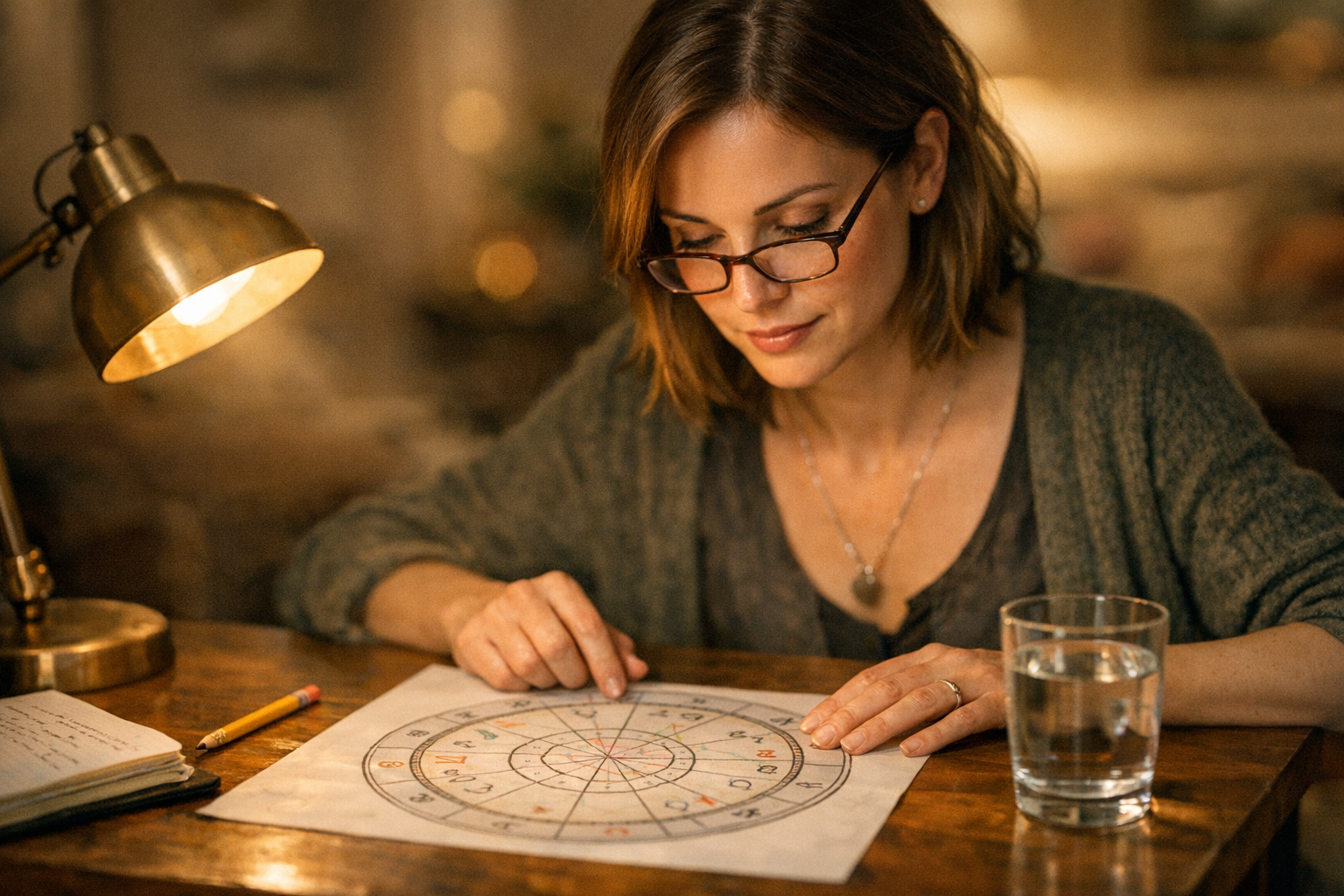
She sat across from me, birth chart spread out, and said, "I’ve tried to read my natal chart, but it’s like staring at an alien language." This isn’t the first time I’ve heard this from a client. The assumption that one must be a seasoned astrologer to make sense of a birth chart is as widespread as it is false. In reality, anyone can learn the basics of reading a birth chart. It all starts with understanding how to break it down in a practical and intuitive way. Whether you're drawn to understand your Scorpio Sun or curious about your Gemini Moon's needs, the process can be straightforward and incredibly enlightening.
The Common Pitfalls of Birth Chart Reading
Most people look at their natal chart and immediately jump to their Sun sign, expecting it to reveal everything about who they are. While the Sun is crucial, it's just one piece of the complex puzzle that is you. Focusing solely on the Sun sign often leads to oversimplified interpretations that miss the richness of the chart. It's akin to judging a book by its cover without reading the chapters within. I've seen clients overlook significant planetary placements because they were too busy trying to align their identity solely with their Sun sign.
Another common mistake is treating the chart like a checklist rather than a cohesive story. Many people try to interpret each planet, house, and aspect in isolation, rather than understanding how they interact with one another. The magic of astrology comes alive when you see how these elements weave together, each influencing the others in a dynamic interplay. A natal chart isn't just a series of static symbols; it's a living map of potential and challenge that evolves with you.
One particularly misunderstood area is the significance of houses in astrology. People often mistake them for personality traits akin to zodiac signs, but in reality, houses represent different areas of life where planetary energies manifest. For instance, Venus in your 7th house speaks differently from Venus in your 12th. Understanding this distinction is key to reading your birth chart accurately and meaningfully.
Beginning with the Ascendant
The Ascendant, or Rising sign, is where you should start when reading your birth chart. It acts as a lens through which all other aspects of your personality are filtered. Consider it the doorway to your entire astrological narrative. In my practice, I encountered Alex, who had a Virgo Ascendant at 13°. Although his Scorpio Sun suggested intensity and secrecy, his Virgo Ascendant added an analytical layer that made him more methodical in expressing his passions than one might typically expect from Scorpio alone.
The Ascendant also sets up the layout of your houses, determining which areas of life are influenced by which signs and planets. For Alex, his Virgo Rising positioned his 6th house — health and daily routines — in Aquarius, making him innovative yet disciplined in his approach to wellness. This detail added nuance to our discussions about his habits and routines, highlighting how he integrates both structure and creativity into his daily life.
Moreover, the degree of your Ascendant can indicate subtle differences in how it presents itself. A client with an Aries Ascendant at 29° will express this energy quite differently than one at 1°. This critical degree often brings more urgency or intensity to the expression of that sign’s qualities. Understanding these nuances can be revelatory for clients who struggle with contradictions in their self-presentation.
Diving into the Sun Sign
With the foundational understanding of the Ascendant established, we move on to your Sun sign — your core essence or identity. Consider Maria, whose Scorpio Sun at 22° occupied her 3rd house of communication and intellect. While Scorpio energy is often about depth and transformation, its placement here pointed to her intense curiosity and profound conversations as central facets of her identity.
The house placement of the Sun illuminates where you shine most brightly or where you seek recognition. Maria’s Scorpio Sun in the 3rd house also suggested her transformative influence on those she communicated with regularly — family members, neighbors, colleagues — shedding light on her natural role as a catalyst for change within her close community.
Additionally, aspects to the Sun can either amplify or modify its expression. Maria's Sun was trine Neptune in her 7th house at 20° Pisces. This aspect imbued her communications with an almost spiritual quality, allowing her to connect with others on an emotional and empathetic level that was both enchanting and healing. Such aspects show how complex yet beautifully orchestrated a person’s identity can be when seen through astrological eyes.
Exploring Moon Sign Needs
The Moon represents our emotional world and instinctual needs. Its placement in your chart reveals what you need to feel secure and fulfilled on an emotional level. Take Jane, for instance: a Gemini Moon at 15° nestled into her 10th house of career and public life. While Gemini Moons often crave variety and intellectual stimulation, its placement here indicated that Jane's emotional fulfillment was closely tied to her professional achievements and public recognition.
The Moon's house position can often surprise those new to astrology by revealing aspects of life where they seek emotional nourishment that might not be immediately obvious. Jane had always described herself as introverted but was surprised to discover how much she thrived emotionally when her work was acknowledged publicly—an insight that helped her embrace opportunities she might have otherwise shunned.
We must also consider how the Moon interacts with other planets in your chart. Jane's Moon formed a square with Mars at 17° Virgo in her 1st house, creating tension between her public aspirations and personal assertiveness. This aspect pointed to occasional internal conflicts about how much energy she should devote to her career versus her personal development — a conflict she recognized upon reflection as central to many past decisions.
Unveiling the Role of Mercury
Mercury, often called the "winged messenger," governs communication, thought processes, and how we convey information. In my practice, I've worked with clients like Lucy, who had Mercury retrograde at 10° Aries in the 8th house. While Aries is typically seen as direct and assertive, the retrograde motion added layers of introspection and depth to her communication style. This placement suggested a mind that delved into transformative topics, often challenging conventional perspectives and stirring profound change in both personal and professional spheres.
When reading a natal chart, the aspects Mercury forms can significantly impact its expression. Lucy’s Mercury was conjunct Saturn at 12° Aries, adding a disciplined and serious tone to her thoughts and communications. This conjunction in the 8th house pointed to a rigorous investigation into life's mysteries, motivating her career as a researcher in psychology. Her chart revealed how Mercury's energy blends with other planetary influences to create unique intellectual landscapes, shaping her profound way of perceiving the world.
Mercury’s house placement illuminates where our mental energies are most active. For Lucy, this meant her sharp intellect was particularly drawn to uncovering hidden truths and engaging in transformative conversations. Understanding these subtle influences can enrich your reading of a birth chart, shedding light on how intellectual pursuits align with broader life themes and challenges.
Misconceptions About Hard Aspects
A common pitfall when learning how to read a birth chart is viewing hard aspects like squares and oppositions as purely negative. While they do indicate tension, they can also be catalysts for growth and transformation. I've seen clients initially disheartened by these aspects until they understood their role as motivators for change. A square between Venus at 18° Leo and Pluto at 16° Scorpio might suggest intense relational dynamics, but it also offers the opportunity for deep psychological insight and transformative love experiences.
Another misconception is that easy aspects like trines and sextiles guarantee a smooth life path. These aspects do signify harmony and ease, but they can also lead to complacency if not actively engaged with. A trine between Jupiter at 5° Sagittarius and the Sun at 6° Aries might bestow natural confidence and optimism, but without conscious action, these gifts might remain underutilized. The key is recognizing that every aspect provides potential—how it manifests depends largely on our conscious awareness and actions.
Integrating Chart Insights Into Daily Life
Interpreting your birth chart goes beyond understanding planetary placements; it's about integrating these insights into daily life decisions and relationships. Consider Emily, whose Mars in Capricorn at 22° sits in her 4th house of home and family. Understanding this placement helped her channel her drive into building a stable home environment where she could also nurture her career ambitions. This awareness allowed Emily to approach family dynamics with more patience and strategic planning.
Reading a natal chart equips you with tools to navigate life challenges more effectively. If you discover a challenging aspect like Mars square Neptune, reflecting on this during times of indecision or confusion can provide clarity about underlying motivations or fears. It's crucial to revisit your chart periodically; as you grow, different elements will resonate more deeply or present new insights into current situations.
Astrology encourages us not only to understand our inherent patterns but also to consciously engage with them. This proactive engagement requires regular reflection on both natal and current transits, facilitating personal growth and clearer decision-making paths. It's about using your chart as a guide rather than a prescription, allowing for flexibility and adaptation as life unfolds.
The journey of reading your birth chart is ongoing; each transit brings new layers of understanding and potential for growth. With Shymea's Birth Chart feature, you can explore every planet, house, and aspect with precision and insight tailored to your unique celestial fingerprint. For those curious about uncovering the deeper stories within their charts, Shymea offers an accessible yet comprehensive tool to illuminate your personal astrological landscape.Discover these dynamics in your own chart with Shymea's Birth Chart feature.
Try Shymea Free