House Systems Explained: Whole Sign, Placidus, Koch — Which One Should You Use?
You're staring at your chart, and planets are scattered across different houses. Each house supposedly narrates a part of your life story, but which narrative...

You're staring at your chart, and planets are scattered across different houses. Each house supposedly narrates a part of your life story, but which narrative is true? You've heard about whole sign houses, Placidus, and Koch systems. The internet and astrology books are a maze of conflicting opinions, leaving you wondering which house system astrology approach is the "right" one. You're not alone. Many of my clients have come to me with charts in hand, each cast in different systems, asking for clarity amidst the confusion. So let's unravel this: why do different house systems give different results? And more importantly, which one should you use?
House Systems: Navigating the Basics
Most people dive into astrology with the belief that there's a universal way to interpret charts. They print a chart from a random website and assume the house placements are set in stone. What they miss is that the type of house system used can dramatically alter interpretations. For example, in Placidus, an intercepted house could hide an entire zodiac sign. If your Sun is within that hidden sign, its expression may feel muted or elusive to you. In whole sign houses, by contrast, each sign occupies a full house, eliminating interceptions entirely. This simplicity makes it easier for beginners to grasp but might lack the nuance that other systems provide.
Another misconception is assuming one system is inherently better than another. The truth is each has its merits and drawbacks. Whole sign houses are praised for their straightforwardness; after all, they were used for centuries before more complex systems were developed. Placidus, on the other hand, offers intricate insights by considering the latitude and birth time to define house cusps. Koch takes this a step further with its time-based calculations designed for psychological depth. Understanding these differences is crucial; using a house system that aligns with your personal or professional focus can transform your readings.
Interceptions are another layer that confuses many budding astrologers. In Placidus or Koch, interceptions can symbolize neglected life areas or untapped potential. Imagine having your Moon intercepted in the 2nd house—your emotional needs and values might feel at odds with what society expects from you financially. Whole sign houses eliminate interceptions by default, making it easier to see how all signs and planets interact across your chart. This reveals themes in their purest form but sometimes at the cost of depth if you're not yet seasoned in astrological interpretation.
Whole Sign Houses: The Ancient Approach
Whole sign houses stand as the oldest method in astrological tradition, originating from Hellenistic practices. Here, each zodiac sign rules a full 30° of a house starting from your Ascendant’s sign. Suppose your Ascendant is at 15° Aries—Aries would rule your entire first house regardless of where other signs begin or end on the wheel. This method simplifies readings by providing a uniform framework where each house represents an area of life fully governed by a single sign's energy.
I often recommend clients new to astrology try whole sign houses first due to its ease and clarity. Check your chart now: locate your Ascendant and note which sign it occupies entirely in whole sign houses. If it’s Gemini, for instance, communication and learning become central themes for your identity and self-expression (1st house matters). This broad-strokes technique doesn’t mean it's simplistic; rather, it provides clarity at a macro level while allowing room for exploration within each house's themes.
Real-world application of whole sign houses often highlights life patterns more distinctly for those seeking career guidance or personal growth insights without getting lost in technical details. A client once discovered her entire career focus shifted when she realized her Midheaven (MC) was ruled entirely by Sagittarius in whole sign—she pivoted from corporate finance to explore teaching opportunities abroad. Her enthusiasm (a Sagittarian trait) for adventure became a guiding principle in career decisions.
Placidus: The Most Popular Choice
The Placidus system remains the standard for many Western astrologers due to its precision in reflecting individual circumstances like time and location of birth. It divides the space between the Ascendant and Midheaven based on time it takes for these points to rise over the eastern horizon, resulting in unequal house sizes and possible interceptions. This granularity can provide profound psychological insights but requires more effort to interpret accurately.
A client came to me puzzled over her career uncertainties; her Sun was intercepted in her 10th house in Placidus while it was prominently placed in whole sign houses. This interception indicated hidden challenges around public recognition and achievement that weren’t visible at first glance using simpler systems. As we navigated her Placidus chart together, she uncovered patterns of self-sabotage stemming from family expectations—an insight that ultimately helped her redefine her professional path.
If you're using Placidus, look at your chart now and locate any intercepted signs or duplicated house cusps—they often reveal tensions between life areas or talents waiting for expression. Suppose Cancer is duplicated over two houses; nurturing roles might dominate both home (4th house) and career (10th house) matters, signaling potential conflicts between domestic needs and professional ambitions that require careful balancing.
Koch: A Time-Based Perspective
Koch houses present another layer of complexity by calculating cusps based on movement through time rather than space alone. It's often favored by those delving into psychological astrology due to its sensitivity to individual timing dynamics—how particular energies unfold over one’s lifespan. If you’re exploring past-life themes or karmic lessons, Koch can be an enlightening system to try.
I recall working with a client whose Saturn sat precisely on their 6th house cusp in Koch but fell into the 5th in Placidus. This shift profoundly impacted their understanding of work-life balance versus creative pursuits—what seemed like mere discipline issues (Saturn in 5th) actually revealed deeper themes around daily routines and health (6th house concerns). The Koch system illuminated how this client’s sense of duty often overshadowed personal joys without them even realizing it.
For those intrigued by timing and unfoldment themes, try examining your chart through both Koch and another system—notice which aspects or planetary positions shift significantly? Such variations can offer new perspectives on long-standing life challenges or recurring themes you've experienced.
The Astrology of Choice: Aligning House Systems with Personal Goals
Choosing between whole sign houses, Placidus, or Koch often boils down to what you're seeking from astrology. A client once transitioned from using Placidus to whole sign houses when her primary focus shifted from introspective psychological exploration to practical career planning. She found the uniformity of whole sign houses provided clarity on broader life themes, such as career shifts and relocations. For her, the simplicity of assigning one sign to each house allowed for a more straightforward analysis of transits impacting her life path. This shift enabled her to make decisive career moves without getting bogged down by intricate psychological elements.
I've also worked with someone who preferred Placidus for its nuanced insights into personal relationships. Her Placidus chart revealed an intercepted Venus in the 7th house, shedding light on her tendency to lose herself in partnerships. Through this system, she discovered how recurring themes of self-neglect in love played out, offering a path towards healthier boundaries and self-awareness. By integrating these insights, she learned how to cultivate more balanced partnerships while maintaining her individuality—something that had eluded her when using other systems.
Then there was the client drawn to Koch's time-based calculations for its karmic implications. She faced recurring workplace challenges and sought deeper understanding beyond surface-level interpretations. Her Koch chart revealed Saturn’s proximity to the 10th house cusp, suggesting lifelong lessons around authority and responsibility in professional arenas. This revelation spurred a significant change in how she approached career conflicts, allowing her to address patterns that had hindered her growth. Here, Koch provided the lens through which she unraveled complex life themes linked to previous experiences.
Navigating Common Misconceptions and Ethical Considerations
A frequent misconception is that one house system is universally superior. This belief stems from oversimplifying astrology's complexity. In truth, no single method holds all answers. Placidus excels in psychological depth, while whole sign houses offer broader thematic clarity. Koch can illuminate time-sensitive lessons across a lifetime. Each serves a purpose depending on one's focus, be it psychological insight or broad thematic exploration. Dismissing one system entirely risks missing valuable perspectives uniquely suited to different life questions.
Ethically speaking, it's crucial to avoid enforcing a system on clients without understanding their needs and preferences. As astrologers, our responsibility lies in guiding clients towards the methods that resonate with their goals and life contexts. Introducing multiple systems can empower clients to explore varying facets of their lives through different lenses. It's essential not to conflate personal preference with objective truth; offering options equips clients with tools for self-discovery rather than dictating their path.
Applying House Systems in Real Life: Practical Steps
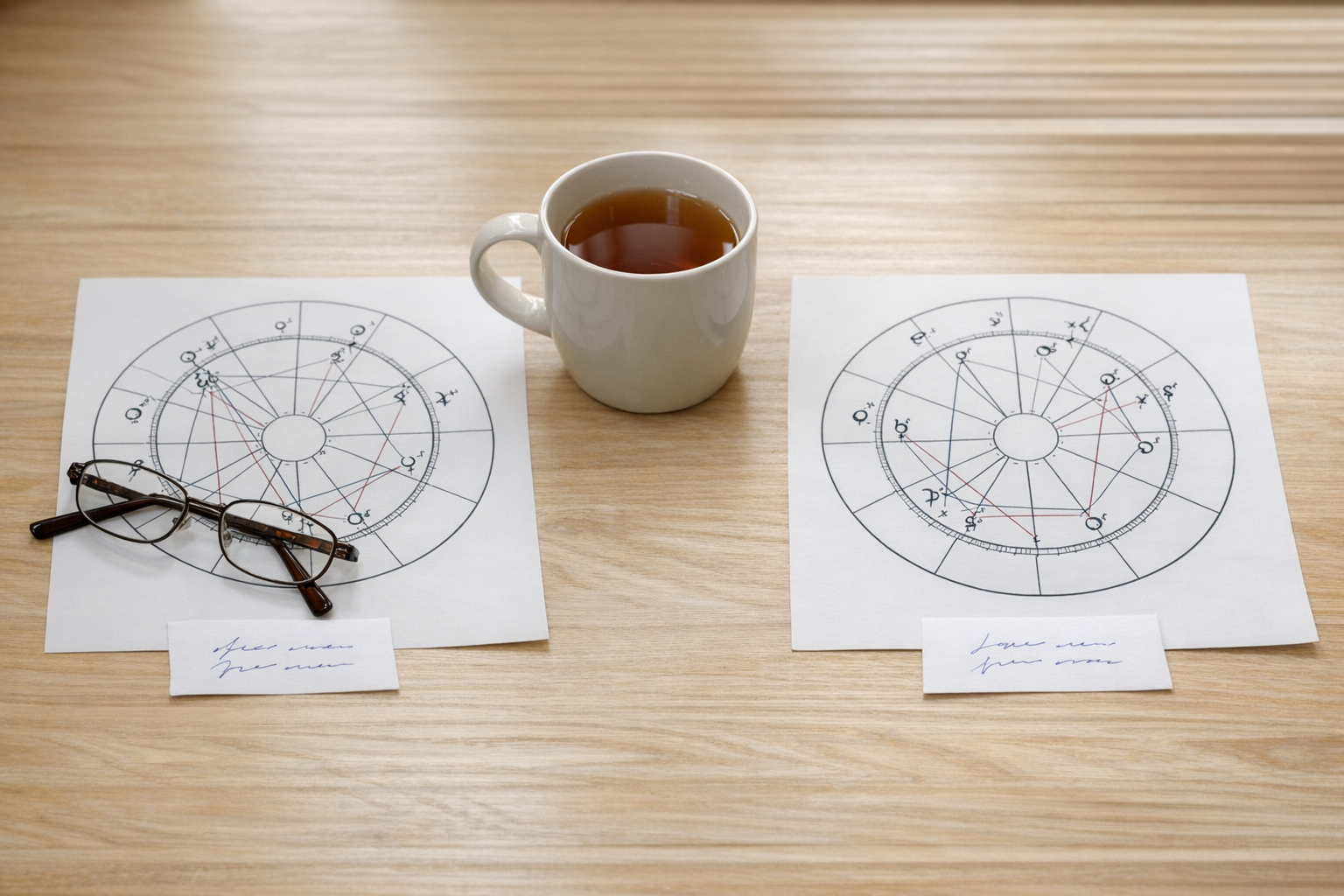
If you're new to astrology or grappling with which house system suits you best, start by examining your chart through each major system: whole sign houses, Placidus, and Koch. Pay attention to where planets shift between houses and how this alters your chart's narrative. Note any interceptions or duplicated signs in Placidus or Koch and consider their implications on your life themes—these subtle shifts can provide fresh insights into familiar patterns.
When a significant transit occurs, check its impact across different house systems to see which resonates most with your lived experience. For instance, a Saturn transit over your 4th house cusp might emphasize family responsibilities in Placidus but highlight personal identity issues if it affects your Ascendant in whole sign houses. This exercise can help pinpoint which system offers the most relevant guidance for current events.
Ultimately, flexibility is key: astrology is an evolving practice tailored to individual journeys rather than fixed doctrines. Experimentation helps you uncover which system aligns with your intuition and objectives, allowing for richer interpretation as your astrological knowledge deepens.
If you're curious about how different house systems might reshape your understanding of your own chart, Shymea's Birth Chart feature offers detailed insights across various methodologies. It's a wonderful tool for exploring the diverse narratives your chart holds.
Discover these dynamics in your own chart with Shymea's Birth Chart feature.
Try Shymea Free