Degrees and Orbs in Astrology: How Precision Changes Everything in Chart Reading
You're staring at your birth chart, eyes darting across a celestial landscape dotted with symbols and numbers. Degrees and orbs in astrology might feel like...
You're staring at your birth chart, eyes darting across a celestial landscape dotted with symbols and numbers. Degrees and orbs in astrology might feel like mysterious codes locked within the wheel, their meanings whispered rather than proclaimed. Yet, what if I told you that the difference between a 1° orb and a 7° orb is the difference between a shout and a whisper? In astrology, degrees aren't just numbers—they're the precision tools that shape your chart's narrative. And while orbs might sound like something out of a wizard's tale, they are, in fact, the breath that gives life to aspects. Let's unlock this code together, starting with the nuances of astrological degrees.
Understanding Degrees: The Key to Precision
When you're looking at astrological degrees, you're witnessing the exact placement of planets along the zodiac wheel. Each degree—360 in total—is a specific moment of expression, a snapshot of celestial energy. Most newcomers to astrology glance over these numbers without understanding their significance. They assume that as long as a planet is in a sign, the specifics don’t matter. But imagine reading a book where every sentence starts with "Once upon a time." It’s the details that transform an ordinary story into something personal and profound.
Degrees also hold critical importance due to their role in determining aspects. Two planets forming an aspect at exactly 0° or 1° have an undeniable intensity. Their energy is direct and potent. But as the orb widens, say to 7° or more, that connection softens. It's still there, just not as commanding. This is where many astrologers diverge—deciding how wide an orb should be allowed can change interpretations dramatically. An aspect with an 8° orb might be easily overlooked, but if it's at 1°, it demands your attention.
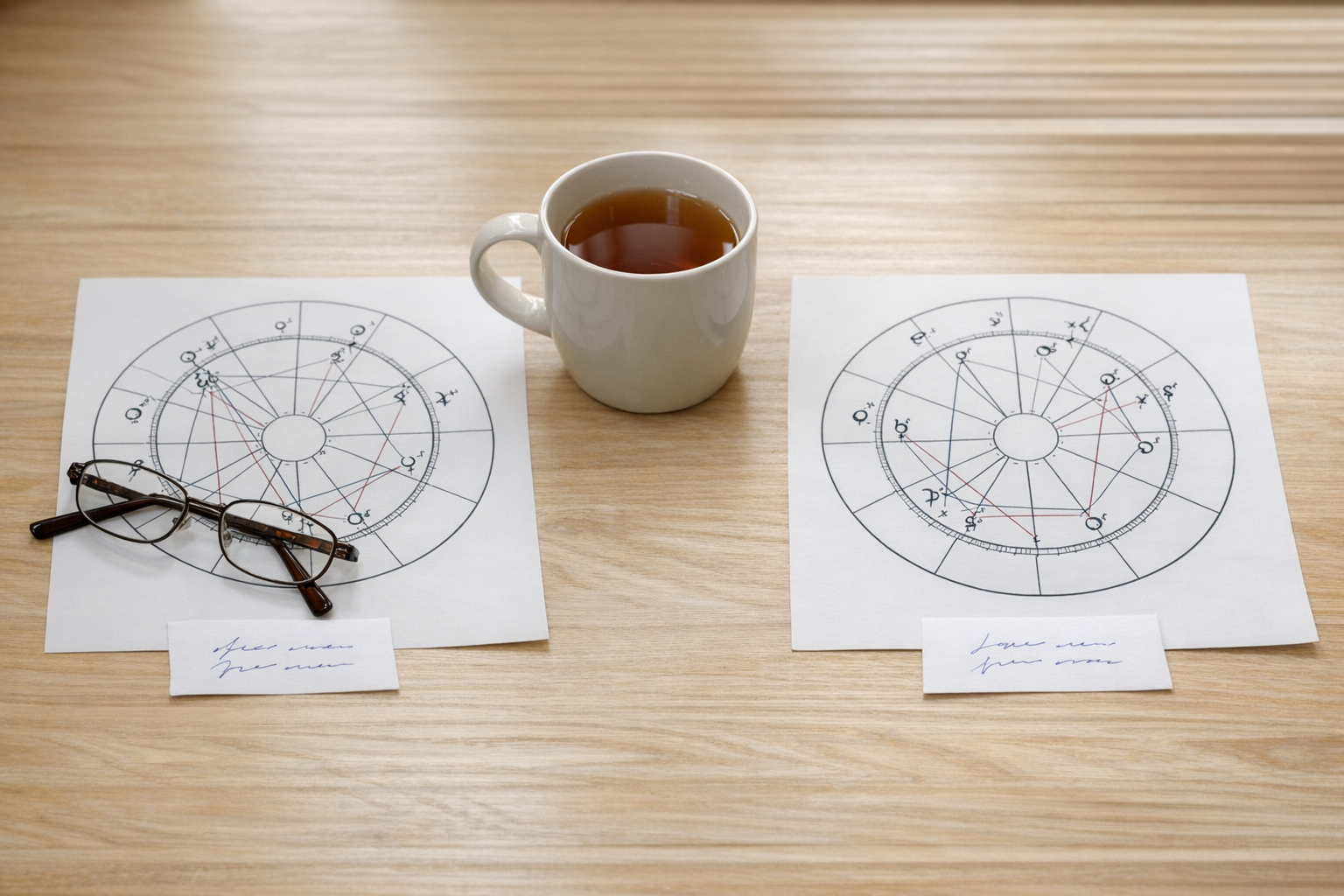
If you've got your chart handy, take a look now. Find a significant aspect—perhaps between your Sun and Moon. What’s the degree difference? If it’s within 1-3°, that aspect shouts its influence in your life. If it's wider, listen for its subtler whispers.
Orbs: Measuring Energetic Influence
Orbs in astrology define how close planets must be to each other by degree to form an effective aspect. Think of them like volume knobs on your stereo: tighter orbs crank up the sound of planetary interactions, while wider orbs fade them into background noise. Most astrologers work with varying orbs for different types of aspects—perhaps tighter for squares and oppositions and looser for sextiles and trines. But what's universally agreed upon is this: as orbs widen, their impact diminishes.
Consider Mercury squaring Saturn within a 2° orb in the tenth house. Here, Mercury's quicksilver thoughts are in tight conflict with Saturn's discipline, making communication at work deliberate but potentially tense. Now consider if Mercury were at 8°. The effect isn't gone—it's just more like a gentle pressure rather than an outright confrontation.
Try this: locate any aspect in your chart with a wider orb—say above 5°. Notice how its influence might be subtle compared to those tighter aspects you identified earlier. Understanding these nuances can transform your reading from generic to deeply personal.
The Power of Critical Degrees
In my practice, I've encountered numerous clients whose lives pivoted around critical degrees—a concept often overlooked by beginners. Critical degrees amplify energy and focus within certain signs—particularly at 0°, 15°, and 29°. These are gateways that signal beginnings, peaks, or completions within their respective elements: cardinal, fixed, or mutable.
One client had Mars at 29° Sagittarius in her seventh house of partnerships. This placement suggested relationships often arrived with sudden changes or ended abruptly—a theme she confirmed had recurred throughout her life. The 29th degree is known as an anaretic degree—it's about culmination and crisis, prompting urgent action before transitioning into a new sign.
If you've got planets near these degrees in your chart, pay close attention—they act as cosmic highlighters, urging you to delve deeper into those areas of life where these planets operate.
The Influence of Sabian Symbols
Sitting quietly behind each degree is another layer of interpretation known as Sabian symbols—360 symbolic images associated with each degree of the zodiac. These symbols offer intuitive insights beyond traditional astrological meanings and bring an imaginative dimension to chart reading.
A client once had his Sun at 15° Cancer—a critical degree—and its associated Sabian symbol is "A Group of People Who Have Overeaten and Enjoyed It." This image spoke volumes about his life themes of abundance and indulgence, helping him recognize how excesses played out both in positive celebrations and detrimental habits.
I encourage you to explore Sabian symbols for any key planets in your chart—especially those at critical degrees or tightly formed aspects. See how these symbols resonate with your life story; they might illuminate facets you've overlooked before.
The Role of Minor Aspects
We often focus on the major aspects—conjunctions, oppositions, squares, trines, and sextiles—but the minor aspects like semisquares (45°), sesquiquadrates (135°), and quincunxes (150°) offer additional layers of interpretation that shouldn't be dismissed. These subtle angles can act like undercurrents in a river, influencing your life in nuanced ways. In one case, a client’s Venus at 135° to Neptune suggested artistic talents that were more like latent potentials, quietly shaping her career in the arts through an inherent sense of beauty and imagination.
Minor aspects might not shout their presence, but they whisper consistently. They're often overlooked because they demand more skill and intuition to interpret. Yet they can reveal underexplored areas of tension or growth. Imagine a Yod configuration, sometimes called the "Finger of God," involving a quincunx. It’s a complex pattern demanding adjustments and sacrifices, often indicating a special purpose or challenge that could feel both frustrating and enlightening at different points in life.
If your chart is heavy with minor aspects, it might suggest a life path punctuated by smaller but significant adjustments rather than sweeping changes. You may find that growth often occurs through these nuanced shifts rather than dramatic transformations. Recognizing and acknowledging these patterns can add rich depth to your understanding of self and purpose.
Common Pitfalls in Reading Degrees and Orbs
One frequent mistake among astrologers is overemphasizing exactitude at the expense of context. While precision matters—especially when interpreting exact degrees like 0° or 29°—context is crucial for nuanced readings. A planet at 5° of a sign squaring another at 8° isn't useless simply because it exceeds a tight orb. Instead, consider the planets involved, the houses they occupy, and how this dance affects larger patterns within the chart.
Another pitfall is ignoring the dynamic nature of orbs. Not every conjunction or opposition feels the same at varying degrees of separation. Ethical astrologers must also navigate these waters with care. Overstating a loose aspect’s influence can instill unnecessary concern; understating a tight aspect’s power might leave vital life themes unexplored. The key lies in balanced interpretation—sensitive to both precision and nuance.
Lastly, beginners might rush to interpret their charts without considering transits impacting natal aspects. An aspect with a wide orb could suddenly gain prominence if activated by a transiting planet—like Saturn crossing over your natal Mars—and this will amplify its latent potential or challenge.
Practical Steps for Applying Degrees and Orbs
If you’re diving into your chart analysis, begin by prioritizing aspects with orbs within 3°—these will be your chart's prominent players. Take note of any planets at critical degrees as well; these will often signify turning points or themes demanding attention throughout life. You might also observe how tighter orbs correspond to life events or internal experiences to better understand their manifestation.
A helpful practice is journaling life events around significant transits to natal aspects, particularly those involving tight orbs or critical degrees. Over time, patterns will emerge, offering clarity on how these elements uniquely manifest in your life. Use this as an opportunity for self-awareness rather than predictive anxiety; remember that astrology illuminates possibilities more than certainties.
For those newer to astrology, consider starting with just one aspect at a time—perhaps your Sun’s closest aspect—and note its real-life parallels. Record observations around emotional states, relationship dynamics, or career shifts when this aspect is activated by transit.
Astrology is a lifelong journey of discovery, not just about celestial bodies but about ourselves as well. If you're curious about exploring these intricate details in your own chart or need guidance on identifying critical degrees and tight orbs, Shymea's Birth Chart feature provides an accurate and comprehensive view to help illuminate your path forward.Discover these dynamics in your own chart with Shymea's Birth Chart feature.
Try Shymea Free