Astrology vs. Astronomy: What Is the Difference (and Why Both Matter)
Imagine you're sitting at your kitchen table with a printed copy of your natal chart, filled with mysterious symbols and intersecting lines. As you trace the...
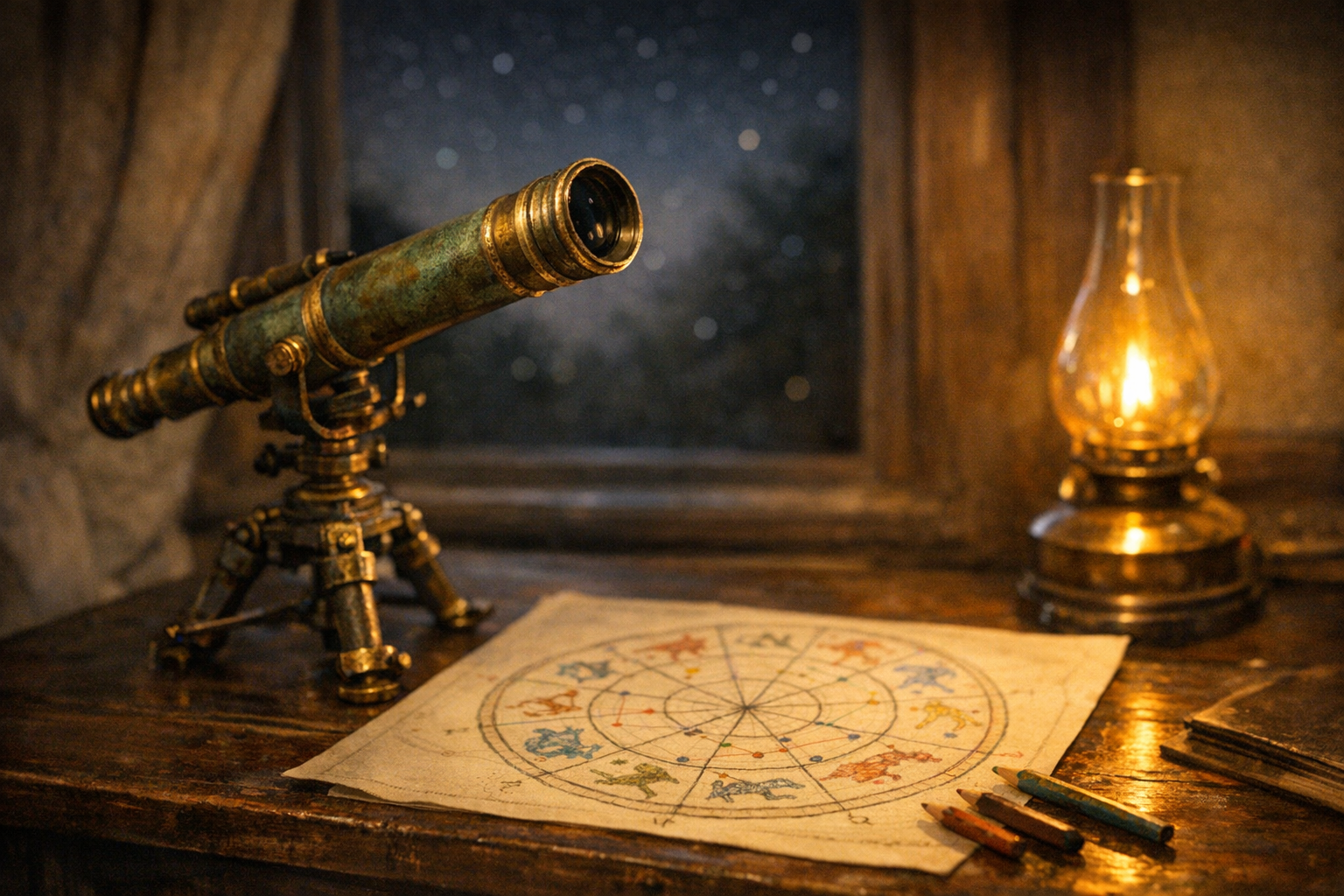
Imagine you're sitting at your kitchen table with a printed copy of your natal chart, filled with mysterious symbols and intersecting lines. As you trace the paths of planets scattered across various houses, a question emerges: what exactly is the difference between astrology and astronomy? It's a question I've faced countless times in my practice, often from clients seeking to understand their place in the cosmos. To untangle this enigma, let's delve into the shared roots and divergent paths of these two fields, illuminating why both remain profoundly important today.
The Historical Convergence and Divergence
Until about 300 years ago, astrology and astronomy were indistinguishable. The ancients gazed at the night sky, not only to track celestial events but to divine their implications for human life. Over centuries, however, these twin disciplines diverged. Astronomy evolved into a science, committed to understanding the universe through empirical observation and mathematical principles. Meanwhile, astrology retained its mystical essence, translating cosmic patterns into insights about human experience. This divergence often leads to confusion; many view astrology as an antiquated pseudoscience. Yet, what they miss is how deeply intertwined these fields remain in their shared origins and objectives.
Many people mistakenly assume that because astrology isn't a "hard" science like astronomy, it lacks validity. But in practice, astrology offers a different kind of truth—a qualitative understanding of existence rather than a quantitative one. Think of it as comparing poetry to physics; each has its own language and purpose. While astronomy charts the physical realities of space, astrology interprets these movements as symbolic narratives that enrich our lives. This interpretive quality doesn't undermine its utility; instead, it enhances it.
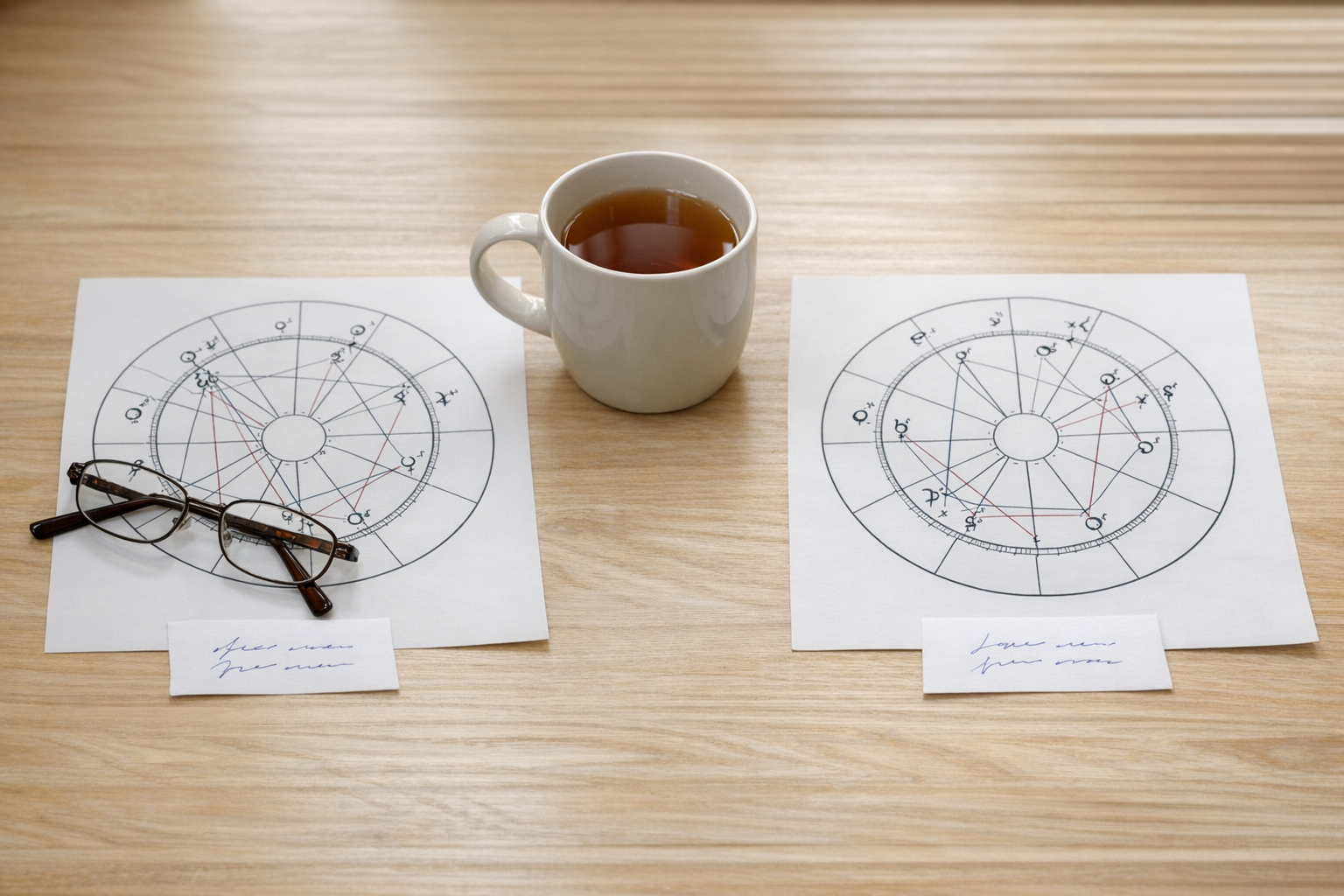
Try this: open up your birth chart. As you identify where each planet resides in your chart’s houses, you're engaging in a dance between astrology and astronomy. Consider Saturn at 15° Aquarius in your 9th house. Astronomically, this marks a real position of Saturn in the solar system at your birth. Astrologically, it suggests a life lesson involving philosophical pursuits or higher education—blending cosmic reality with human narrative.
Astronomy's Contribution to Modern Astrology
Today’s astrologers rely heavily on astronomical data to provide accurate readings. Without precise planetary positions calculated by astronomers, astrological charts would lack the precision needed for meaningful interpretations. For example, knowing that Mars is transiting at 23° Leo allows an astrologer to pinpoint its influence on personal or collective dynamics accurately. This technical accuracy is indispensable in crafting horoscopes and personalized reports that resonate with clients.
Consider how astronomers track lunar phases with exactitude. In astrology, the moon governs our emotional landscape, fluctuating with its phases through the zodiac signs. When I see a client with their natal moon at 7° Cancer facing an opposition from Pluto transiting at 7° Capricorn, I can predict intense emotional transformations on the horizon—an interpretation grounded in solid astronomical data.
Look up the current lunar phase and find where it falls in your chart. This simple exercise illustrates how astronomy underpins astrology's interpretive power. If today’s new moon at 12° Virgo touches your 4th house cusp, expect fresh beginnings in home-related matters—a prediction rooted in celestial mechanics yet rich with personal meaning.
A Case Study: Astrology’s Qualitative Insight
One client I worked with vividly demonstrates astrology's power when informed by astronomical accuracy. She came to me grappling with a career crossroads. Her birth chart revealed Jupiter conjunct her Midheaven at 18° Sagittarius, but she was feeling anything but expansive or optimistic about her career path. Upon examining her transits, I noted Neptune at 19° Pisces squaring this conjunction—a classic signal of confusion or disillusionment.
This challenging aspect illuminated her struggle: while her innate potential for growth was strong (Jupiter), nebulous influences (Neptune) clouded her vision, creating uncertainty rather than clarity. Understanding this helped her navigate her career choices with more self-compassion and less frustration—an example of astrology offering nuanced guidance when informed by precise astronomical data.
To apply this idea to your chart: identify any major planetary aspects involving your Midheaven or ascendant degrees. Such insights often reveal underlying tensions or opportunities shaping your professional life or public persona—insights drawn from both fields’ unique contributions.
Astrology and Astronomy: Real-World Applications
The interplay between astrology and astronomy has practical applications beyond personal development. In my practice, I've seen how understanding celestial cycles aids in planning crucial life events—whether launching a business during a Jupiter transit through your second house or scheduling important conversations when Mercury is well-aspected.
Astronomy also enriches astrological counseling by providing timing precision that can be invaluable for clients facing significant decisions. Imagine planning a wedding date when Venus forms a harmonious trine to Mars—this requires both astronomical know-how and astrological insight to optimize relationship dynamics on that special day.
Try this: choose an upcoming event and examine its transits using accurate astronomical positions provided by apps like Shymea’s Cosmos feature. This approach will give you both a celestial map and interpretive guidance for navigating life's turning points more effectively.
The Interdisciplinary Synergy of Astrology and Astronomy
One might think astrology and astronomy have become entirely separate entities, but their symbiosis is indispensable in interdisciplinary contexts. Consider a scenario I encountered with a client who is also a farmer. She sought guidance on optimal planting cycles. Her natal chart indicated a strong connection to lunar phases, with her Moon at 28° Taurus in the 6th house. Together, we explored how astronomically-calibrated lunar cycles could align with her agricultural practices. When the Moon waxed through earth signs, her crops showed remarkable growth—a testament to how these ancient disciplines intertwine in our modern world.
This example highlights the broad scope of astrology's utility when informed by precise astronomical data. In the realm of financial markets, savvy investors sometimes consult astrologers for insights into market cycles. Jupiter's transit through the 2nd house, tracked with astronomical precision, can suggest periods of financial expansion. Yet, it’s not solely about potential gains; understanding astrological energies can help mitigate risks during challenging transits, like Saturn opposing natal Venus in the 8th house. Such intersections reveal a fusion of empirical observation and symbolic insight that extends beyond personal growth into broader societal applications.
For those engaged in creative fields, astrology guided by astronomy offers a unique lens to time projects for maximum impact. A filmmaker client once aligned her premiere with Venus at 0° Leo conjunct her Midheaven, capitalizing on a celestial window for public acclaim and artistic expression. The astronomical underpinning provided the timing accuracy necessary for this strategic decision, illustrating how these disciplines complement each other in crafting opportunities that resonate deeply with an individual's path.
Debunking Misconceptions: Astrology as More Than Pseudoscience
A persistent misconception is that astrology is merely pseudoscientific entertainment devoid of meaningful application. This narrow view overlooks how astrology provides a reflective framework for understanding life's complexities. It’s not about predicting the future but facilitating self-awareness and personal growth. While skeptics may dismiss astrology due to its lack of empirical validation like astronomy’s, I've witnessed countless clients gain profound insights from examining their charts, demonstrating astrology's capacity to offer qualitative depth beyond numerical data.
Another pitfall lies in the misapplication of astrological interpretations without the grounding influence of astronomy. For example, ignoring retrograde cycles could lead to oversights in timing crucial decisions or misinterpreting planetary influences. The ethics of astrological practice demand informed interpretations that respect both fields' contributions. This means recognizing when a challenging aspect might require caution rather than fear and using astrology to empower rather than dictate choices—a subtle yet vital distinction often misunderstood by detractors.
Applying Astrological-Astronomical Wisdom in Everyday Life
How can one incorporate the wisdom from both astrology and astronomy into daily living? Start by familiarizing yourself with your natal chart through an app or service providing accurate astronomical data, such as Shymea's Birth Chart feature. Understanding your Sun, Moon, and Rising signs allows you to see how celestial mechanics shape your day-to-day experiences. Tracking transits like Mars entering your 10th house can guide career moves or motivate goal-setting during this proactive phase.
An effective practice involves syncing your personal rhythms with lunar phases tracked astronomically. If you're launching a project or starting a new venture, initiate it during a waxing moon phase for momentum and growth potential. Conversely, plan introspective activities during waning phases to align with natural cycles of release and renewal. This harmonization with cosmic rhythms enhances decision-making processes and fosters a deeper connection with your environment.
For those navigating complex relational dynamics, observing synastry—where planets in two charts interact—provides insight into compatibility and challenges. This exploration requires precise astronomical data to assess aspects accurately, such as Venus square Mars between charts signaling passionate yet potentially volatile interactions. By applying these principles mindfully, relationships can be approached with greater empathy and understanding.
Whether you're new to astrology or an experienced practitioner looking to deepen your knowledge, harnessing both astrological insight and astronomical precision enriches life’s journey. Understanding this interplay can transform how we engage with the world around us, offering guidance through life's myriad challenges and opportunities. If you're curious about how current cosmic events might influence your personal path, Shymea's Cosmos feature provides real-time transit insights to help you navigate these celestial dynamics with confidence.
Track these transits in real time with Shymea's Cosmos.
Try Shymea Free