Aspects in Astrology: What Conjunctions, Squares, Trines, and Oppositions Really Mean
When we talk about astrology, we often hear about the signs and houses, but the real magic lies in the aspects — the geometric angles between planets. It's...

When we talk about astrology, we often hear about the signs and houses, but the real magic lies in the aspects — the geometric angles between planets. It's fascinating to consider that some of the most transformative events in life are sparked not by individual planets or signs, but by the dynamic conversations between them. Think of aspects as dialogues in a cosmic play, each with its own tone and intensity. In my years of practice, I've discovered that understanding aspects can reveal insights often missed by focusing solely on signs. Let's dive into conjunctions, squares, trines, and oppositions, and see how they weave the intricate tapestry of a natal chart.
The True Language of Aspects
One common misconception is that aspects are simple checks and balances — good versus bad. But I've found that each aspect carries its own potential, dependent on its context within the chart. For example, a square is not inherently a negative influence; instead, it represents a dynamic tension urging growth. When people learn about aspects in astrology, they often stop at keywords like "conflict" or "harmony," missing the nuanced interplay of energies that drive personal evolution. Aspects are about potential and how that potential is accessed or blocked by other elements in the chart.
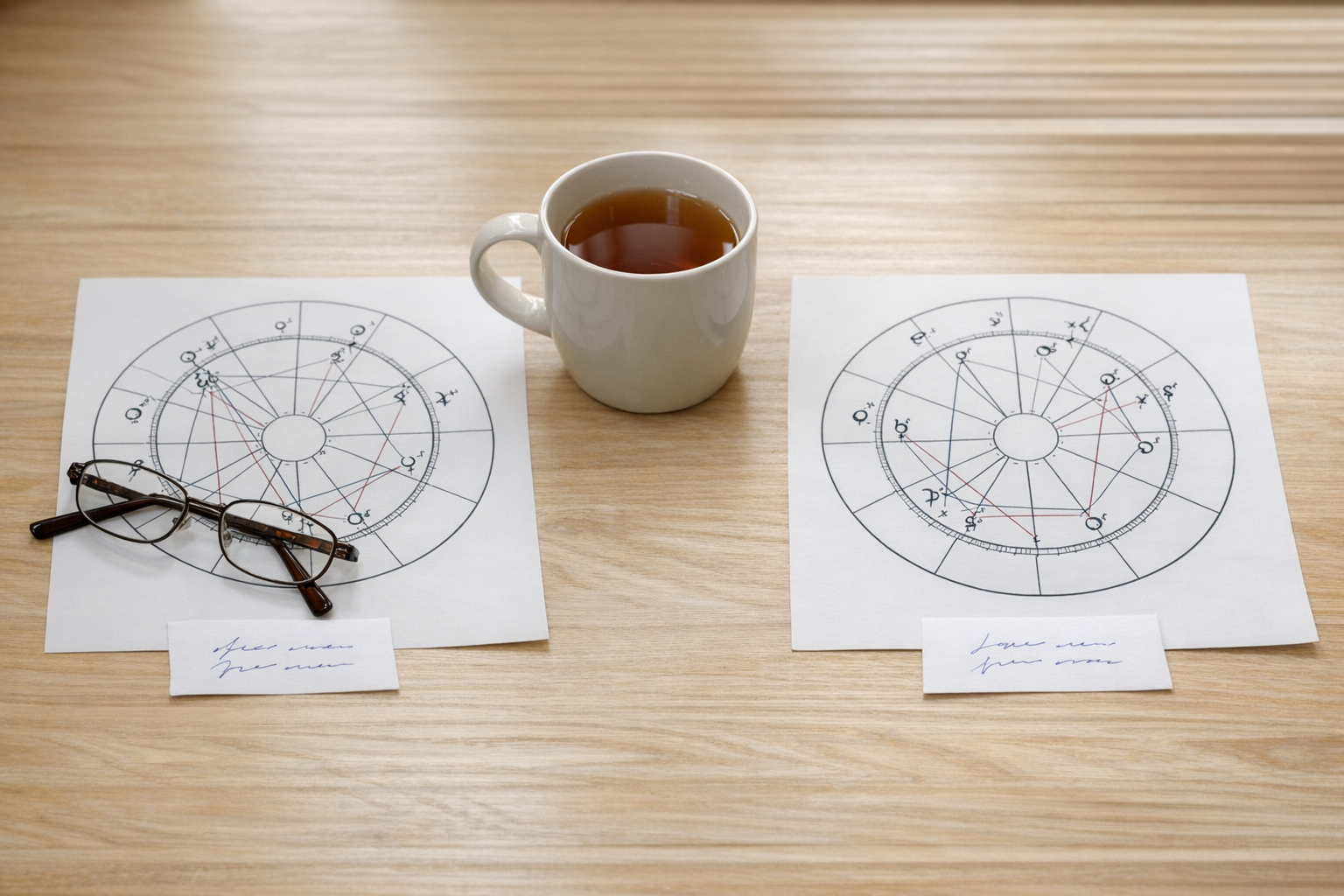
To truly understand aspects, imagine a natal chart as an orchestra. Each planet is an instrument playing a note, and aspects are the harmonies or dissonances created between these notes. Without this interplay, the music of your life would lack depth and complexity. This analogy highlights why aspects should never be oversimplified. They're not just static lines on a chart but dynamic interactions that change over time as planets move.
Another crucial point is the concept of orbs — the allowable degrees of separation for an aspect to be considered active. For conjunctions, I typically allow up to 10 degrees, while squares, trines, and oppositions usually work within 7-8 degrees. This flexibility is where much of astrology's art comes into play. The tighter the orb, the more potent the aspect's influence. Understanding these subtleties transforms your reading from a rote interpretation to an insightful narrative.
The Potency of Conjunctions
Conjunctions occur when two planets are within close proximity in the same sign and degree range, typically up to 10 degrees apart. They amplify energy rather than blend it smoothly. Imagine Mars at 5° Aries conjunct Venus at 3° Aries in the 1st house — here lies a fierce drive for passionate expression but also potential for impulsiveness in relationships. In my experience, conjunctions demand attention because they often signal intense areas of focus in one’s life.
In a hypothetical chart, say Mercury at 15° Virgo conjuncts the Sun at 18° Virgo in the 10th house. This configuration suggests a powerhouse of intellectual clarity in career matters. The Sun illuminates Mercury’s analytical nature, facilitating impressive communication skills that can lead to public recognition. However, there's also potential for over-analysis or self-criticism if other challenging aspects come into play.
Conjunctions ask us to consider both planets involved and their inherent natures. Their union isn't always harmonious — think Saturn conjunct Moon — which might manifest as emotional restraint or difficulty in expressing feelings openly. Still, it's this very tension that can drive profound personal development.
The Challenge of Squares
If you’ve ever felt stuck or faced repeated challenges in a particular area of your life, you might have a square aspect to thank for it. Squares represent 90-degree angles between planets and often bring about internal friction urging action or change. Consider Mars at 12° Cancer squaring Uranus at 12° Aries — an aspect I've seen catalyze sudden shifts and unexpected events in clients' lives.
One client with this square found herself continually switching careers every few years despite longing for stability. This Mars-Uranus tension manifested as an unending desire for freedom clashing with practical constraints. The square aspect forced her to address underlying fears around commitment and authority figures, ultimately leading her to establish her own business where she could thrive on her terms.
Squares invite us to engage directly with our inner conflicts rather than shy away from them. They require effort to navigate but often result in breakthroughs once we confront what's holding us back. A square might feel like a perpetual itch you can't scratch until you understand its message and integrate it into your life’s broader narrative.
The Ease of Trines
Trines involve planets positioned 120 degrees apart and signify harmony and ease between their energies — almost too easy at times, leading some to overlook their benefits. I remember consulting with someone whose Jupiter at 22° Gemini trined their Mercury at 22° Libra in the 3rd house. It offered them natural communication skills, ideal for their work as a writer.
However, this ease sometimes led them to rest on their laurels rather than push forward for greater achievements. Trines can create a comfort zone that doesn’t necessarily spur action unless other chart elements demand it. This underscores why understanding how trines fit into your broader chart narrative is essential for maximizing their potential.
In practice, trines offer opportunities for growth without resistance but require awareness to harness effectively. They remind us that while effortless talents are gifts, they must be actively engaged to reach their full potential — much like muscles that atrophy without use.
The Tension of Oppositions
Oppositions occur when two planets are 180 degrees apart, often across the axis of opposite signs. They create a seesaw effect, where the energies of both planets must find balance, like the Moon at 25° Taurus opposing Pluto at 25° Scorpio across the 2nd and 8th houses. I've seen this configuration manifest in clients wrestling with security versus transformation. One client, with this opposition, experienced cycles of clinging to material possessions before undergoing profound personal upheavals — a constant tug-of-war between comfort and the need for deep change.
This dynamic tension can be enriching when we learn to navigate the balancing act. In relationships, for instance, Venus opposing Mars might create an electric chemistry, though it may also bring power struggles. The key lies in recognizing that oppositions are not about negation but integration. Both energies need acknowledgment and expression; otherwise, they tend to manifest externally as conflict or projection onto others. This insight often leads to greater self-awareness and healthier interpersonal dynamics.
As I often remind my clients, oppositions invite us to embrace paradoxes within ourselves. They teach us about perspective-taking and the importance of seeing both sides of a coin. When approached with openness and curiosity, oppositions can lead to significant growth and understanding. Through the dance of opposing forces, we come to realize that true equilibrium is an ongoing process rather than a static state.
Misunderstood Aspects and Their Nuances
Many people entering astrology expect aspects to be straightforward predictors of fate — a misconception that often leaves them disillusioned. A common pitfall is labeling squares as merely negative or trines as unequivocally positive. This reductionist view strips aspects of their depth. In reality, each aspect's influence varies based on the planets involved, their signs, houses, and other chart factors. The same square can challenge one person while catalyzing another toward greatness.
Ethically speaking, it's crucial to approach aspects with humility and respect for their complexity. An astrologer should never predict definite outcomes based solely on one aspect, such as forecasting doom from a Mars-Saturn square. Instead, aspects should be viewed as opportunities for clients to explore themes in their lives actively. I've found that empowering clients with this mindset fosters a sense of agency rather than fatalism.
Astrologers must also be vigilant about cultural and contextual nuances when interpreting aspects. For example, a Sun-Jupiter trine might suggest confidence or excess depending on cultural values around ambition and restraint. Being mindful of these nuances ensures interpretations are sensitive and relevant to individual experiences.
Applying Aspect Insights in Daily Life
To make the most of astrological insights, consider keeping an aspect journal to track how specific transits affect you over time. Record observations on how certain squares or trines manifest in your daily experiences or relationships. Over time, patterns may emerge, providing valuable personal insights into how you interact with these energies in your chart.
I also recommend consciously engaging with challenging aspects like squares through active problem-solving and introspection. For instance, if you notice recurring themes tied to a particular square aspect, try exploring those issues through therapy or creative outlets. By facing these challenges head-on, you can transform potential obstacles into catalysts for personal growth.
Lastly, remember that astrology is not just about understanding yourself but also enhancing relationships with others. Recognize how your aspects interact with those around you through synastry charts — a powerful tool for exploring compatibility dynamics with partners or friends. Understanding these interactions enriches your capacity for empathy and cooperation in all relationships.
Astrology offers us profound insights into our strengths and challenges through the lens of aspects. If you're curious about how these dynamic conversations between planets play out in your own life, Shymea's Birth Chart feature provides a detailed analysis tailored specifically to your unique cosmic blueprint. Unlock the wisdom hidden within your chart and see how these celestial dialogues shape your journey.
Discover these dynamics in your own chart with Shymea's Birth Chart feature.
Try Shymea Free